Low reading levels have severe consequences across multiple aspects of life, including poorer educational outcomes, limited employment opportunities, worse health, higher rates of involvement with the criminal justice system, and negative impacts on mental health and social participation. Individuals with low literacy often struggle to navigate daily tasks, lack confidence, and can perpetuate a cycle of poverty and low literacy in their own families. Educational and economic consequences Lower educational attainment:Individuals with low reading skills are less likely to complete high school or attend college. Limited job prospects:Low literacy is linked…
Day: December 2, 2025
Child Illiteracy in America: Statistics, Facts, and Resources
December 5, 2024 Literacy goes far beyond the ability to read a book or write a letter. Illiteracy can cause immeasurable damage to an individual’s emotional and intellectual development, and often limits a person’s ability to achieve a fulfilling and successful adult life. Strong literacy aligns with the ways that individuals learn and socially interact. It forms the foundation for a lifetime of communication with family, peers, and employers. Ensuring strong reading and writing skills in the early stages of a child’s development is vitally important to preventing problems later…
10 Costs and Consequences of the Literacy Crisis
Let’s get right to the point: Literacy—or the lack thereof—is a big issue in the United States. Those who lack basic literacy skills (not to mention more comprehensive reading, writing, and critical thinking capabilities) are too often left behind, compelled to either drop out of school or pass through with hopes and plans unfulfilled. Of course, the lack of adequate literacy skills is not just a problem for individuals; it is also a major concern for society as a whole. Take a look at the list below. Twenty-five percent of childrenin the…
7 Ways to Improve Reading Literacy Among Today’s Students
Ellier Leng April 29, 2024 It goes without saying that literacy is one of the most important skills to possess in this day and age. Reading literacy isn’t just about decoding words, it is the foundation of a child’s future opportunities and social advancements. As you’re reading this article, it’s easy to overlook the privilege of literacy that allows us to understand and engage with written text. Yet, around the globe, countless adults lack this fundamental skill, unable to read beyond basic levels. Statistics reveal that in the US alone,…
6 Schoolwide Strategies to Improve Reading Skills
Instructional Coaching Helping students build their identities as readers and explicitly teaching the mechanics of reading can yield big gains across grade levels. By Alissa Alteri Shea July 22, 2024 Teaching children how to read is one of the most important tasks we undertake as educators in elementary school. Being able to read efficiently opens up opportunities for all children to succeed in school, in work, and in serving our communities. It is more than just about good instruction: It is a social justice issue that begins in our schools. Last…
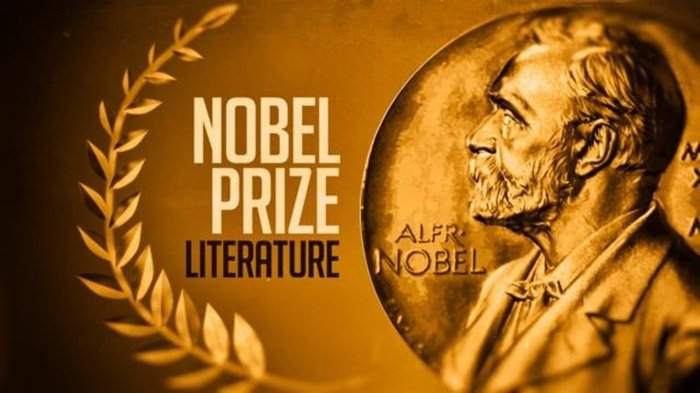
Nobel laureates in Literature
The Nobel Prize in Literature is awarded annually by the Swedish Academy to authors for outstanding contributions in the field of literature. It is one of the five Nobel Prizes established by the 1895 will of Alfred Nobel, which are awarded for outstanding contributions in chemistry, physics, literature, peace, and physiology or medicine. As dictated by Nobel’s will, the award is administered by the Nobel Foundation and awarded by the Swedish Academy.Each recipient receives a medal, a diploma and a monetary award prize that has varied throughout the years. In 1901, the first laureate Sully Prudhomme received 150,782 SEK, which is equivalent to 8,823,637.78 SEK in January 2018. The award…
William Faulkner
William Cuthbert Falkner was born on September 25, 1897, in New Albany, Mississippi, to Murry Cuthbert Falkner, a railroad worker, and Maud Butler, a housewife. William was raised in Oxford, Mississippi, and, in 1915, left high school to work as a bookkeeper. Longing for adventure, he joined the Canadian Royal Air Force in 1918 by changing the spelling of his name to the British-sounding Faulkner. Faulkner entered the University of Mississippi in 1919 but withdrew in 1920. He then held various jobs in New York and Mississippi until 1924. Faulkner’s…